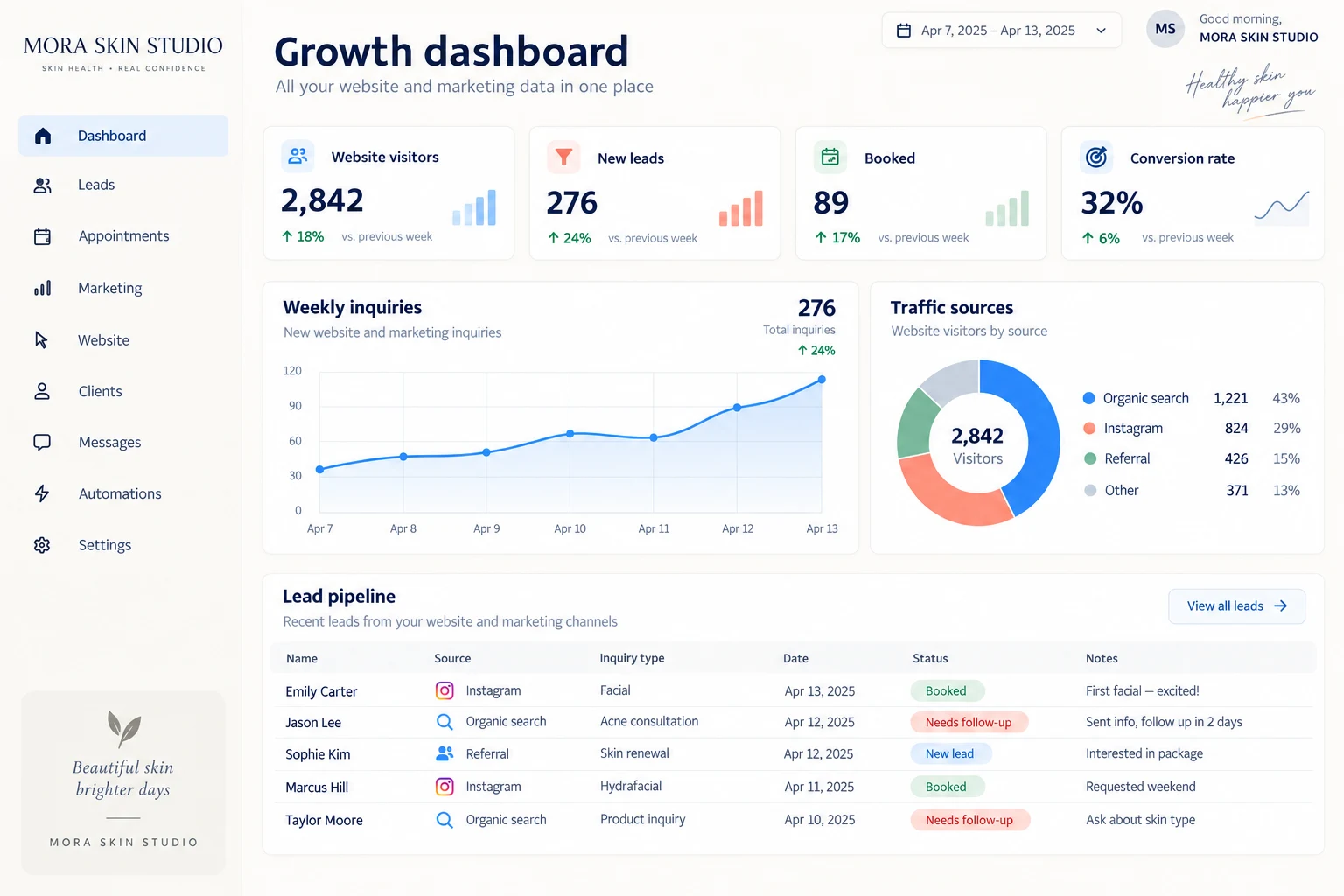
Custom CRM & pipelines
Lead capture, qualification, ownership, status, notes, tasks, follow-up, reporting, and the rules that move opportunities forward.
Blueprint Media designs and engineers custom apps, CRMs, intake and workflow dashboards, databases, communication centers, portals, and internal tools—across product strategy, UI/UX, frontend, backend, integrations, and deployment.
New product, operational replacement, or integration layer—scoped around the workflow and risk.
Purpose-built systems
When generic tools create more steps than they remove, we map the real work and build the interfaces, rules, and data structure your team needs.
Lead capture, qualification, ownership, status, notes, tasks, follow-up, reporting, and the rules that move opportunities forward.
Requests enter one place, get routed to the right person, and move through visible stages with fewer manual handoffs.
Searchable records, controlled data entry, admin tools, imports, exports, reporting, and dependable source-of-truth views.
Shared inboxes, notifications, templates, customer histories, internal notes, and connected email or messaging workflows.
Responsive web apps, account areas, onboarding, submissions, approvals, documents, payments, and self-service experiences.
Role-based access, audit trails, secrets handling, controlled workflows, backups, and operational visibility designed into the system.
Full-stack delivery
A polished interface is one layer. The value comes from how the experience, application logic, data, integrations, access, and deployment behave together.
The stack is selected after requirements—not forced before discovery.
From process to product
Custom software fails when a team starts with screens and discovers the rules later. We make the users, permissions, edge cases, data, and definition of success visible before engineering begins.
Interview stakeholders, observe the current workflow, inventory tools and data, and identify the cost of the present workaround.
Define users, roles, states, data model, integrations, wireframes, risks, and a prioritized release plan.
Engineer the frontend, backend, database, and integrations in reviewable milestones with testing against agreed acceptance criteria.
Configure environments, migrate approved data, document the system, support rollout, and help the team move into the new workflow.
Monitor reliability and product behavior, gather feedback, prioritize improvements, and expand only where usage justifies it.
Security and reliability
We design access and operations around the sensitivity of the system: who can see what, which actions require authority, where data moves, how secrets are handled, and how the team recovers when something goes wrong.
Proof of engineering
The strongest proof is what the software does behind the interface. These builds combine custom experiences with data, automation, administration, and deployment.
GetCited
Blueprint Media built the web dashboard, multi-engine collectors, persistent audit queue, source ranking, content analysis, report generation, authentication, transactional email, admin tools, lead capture, and deployment.

A custom dashboard concept demonstrating how scattered operational information can become one readable control surface.
A complete responsive frontend and structured publishing system with a 299-term glossary, 729 custom graphics, learning paths, and automated internal linking.
View the content engine case studyGood fit
Before we scope it
Yes. We can build responsive web applications and scope native or cross-platform mobile delivery when the use case needs device-specific behavior or app-store distribution. The platform choice follows the users, workflow, budget, and maintenance plan.
Often, yes. Discovery includes an integration inventory so we can evaluate available APIs, authentication, data ownership, rate limits, and vendor constraints before promising a connection.
Custom systems are scoped after discovery because complexity depends on roles, workflows, integrations, data migration, reliability, security, and launch requirements. We define a practical first release before estimating the build.
We can configure deployment, monitoring, backups, documentation, and an ongoing improvement plan. Infrastructure and support are matched to the system's risk, usage, and response requirements.
No one can responsibly guarantee a system is unhackable. We implement security-minded architecture and controls appropriate to scope. Regulated compliance, formal audits, penetration tests, and certifications require explicit requirements and may involve qualified third parties.
Ownership, licensing, third-party services, source access, credentials, and handoff terms are defined in the proposal before work begins so there is no ambiguity later.
Bring us the messy workflow
Show us the spreadsheets, inboxes, handoffs, dashboards, or product idea. We’ll identify the users, logic, data, risk, and smallest useful release.